
He also said that his country would continue to talk about the Kashmir issue "through channels that are acceptable" and prayed that "the issue is amicably resolved".
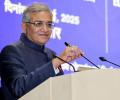
As an IAS officer in Kerala, Gyanesh Kumar -- who the Congress described as Amit Shah's 'right hand man' -- had a good working equation with the state's Congress and Left leaders.

Churchill Brothers took a crucial step towards winning their third I-League title with a dramatic 2-2 draw against Inter Kashi, whose title hopes were dashed by a stoppage-time equaliser.
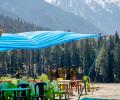
The entry and exit points are being closely scrutinised by the investigating NIA teams for clues to the modus operandi of the terrorists, the officials said.

Aerial views of the snow-covered Pir Panjal mountain range in Jammu and Kashmir.

The wife of Surat resident Shailesh Kalathiya, who lost his life in the terror attack in Kashmir's Pahalgam, on Thursday said terrorists showed no remorse as they were seen laughing after shooting her husband dead.
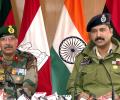
Officials have also written to the Pakistan side regarding the medicines, an official statement said.

The Indian Air Force conducted precision strikes on terror hideouts in Pakistan, targeting a Jaish-e-Mohammad communication network housed in a primary health centre in Tehra Kalan village. The communication setup was essential for planning and coordinating activities with infiltrated terrorists in Jammu and Kashmir. The strikes aim to dismantle the communication network and hinder the terrorists' ability to operate.
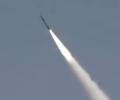
Pakistan successfully conducted a training launch of the 'Fatah series' surface-to-surface missile with a range of 120 kilometers. The launch comes amid heightened tensions with India following a terror attack in Jammu and Kashmir. The Inter-Services Public Relations (ISPR) said the test was part of the ongoing exercise 'INDUS' and was aimed at ensuring the operational readiness of troops and validating key technical parameters, including the missile's advanced navigation system and enhanced accuracy.

With this decision, the government headed by Prime Minister Narendra Modi has sought to draw a red line against terror incidents and makes clear that it will follow a similar military response as it has after the Pahalgam incident if terrorists linked to Pakistan target India again.

The Chinese see no need to fight directly. They have an able and willing proxy in Pakistan, points out Shekhar Gupta.
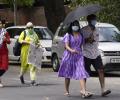
The India meteorological department said heatwave conditions will persist for at least two more days.

Interacting with the Indian diaspora in Kuala Lumpur, Banerjee said, "We have been in talks with them (Pakistan) for decades, despite changes in various paradigms and governments. But one thing remains constant, the conflict with Pakistan."
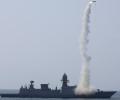
The visuals show the BrahMos anti-ship and anti-surface cruise missiles being launched from a fleet of warships, including Kolkata-class destroyers and Nilgiri and Krivak-class frigates, reaffirming the Navys operational prowess.

India has accused Pakistan of violating the spirit of the Indus Waters Treaty by engaging in acts of terrorism and refusing to modify the treaty. India's Permanent Representative to the UN, Ambassador Parvathaneni Harish, addressed the UN Security Council, highlighting Pakistan's disinformation regarding the treaty and its continued support for cross-border terrorism. He stated that India has always acted responsibly as an upper riparian state and that Pakistan's actions have jeopardized civilian lives, religious harmony, and economic prosperity. India has suspended the treaty until Pakistan ends its support for terrorism.

In the wake of the recent hostilities, both sides have moved from weapons to words, with India dispatching several delegations to visit more than 30 capitals across the world. A similar effort by Pakistan is set to start on Jun 2.

The highlight of Tuesday's debate on Operation Sindoor was the speech by Prime Minister Narendra Modi, with the rebuttal by Congress's Wayanad MP Priyanka Gandhi coming a close second.

Top military officials from India and Pakistan highlighted their views at the Shangri-La Dialogue in Singapore, billed as Asia's premier defence forum, amid heightened tensions between the two sides following last month's military confrontation.
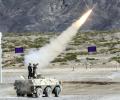
The Chinese military Thursday declined to comment on the performance of China-made weapons used by Pakistan in the recent conflict with India.

Shubham Dwivedi, a 31-year-old businessman from Kanpur who was killed in the Pahalgam terror attack, was cremated at his native village with full state honours on Thursday morning. The cremation was attended by Uttar Pradesh Cabinet ministers Yogendra Upadhyay and Rakesh Sachan, who placed wreaths on Dwivedi's mortal remains and offered their condolences to the bereaved family. A guard of honour was also presented to the departed soul. Dwivedi, who got married to Ashanya on February 12, was among the 26 persons, mostly tourists, who were killed on Tuesday at Baisaran meadow near Pahalgam in Anantnag district in one of the most gruesome attacks targeting civilians in Kashmir in a long time.
Neha Waghulade, a casual announcer with the All India Radio (AIR) in Jalgaon, Maharashtra, survived a deadly terror attack in Pahalgam, Jammu and Kashmir, where 26 people were killed. Waghulade was with a group of tourists at the Baisaran meadows when the attack took place on Tuesday afternoon. She described the chaos and panic as tourists were gunned down and the quick response of the Indian Army in evacuating survivors to safety.
'It was inspired by the Hamas attack and was like their attack -- well planned and well executed.'

Tensions between India and Pakistan are escalating following last week's dastardly terror attack in Pahalgam that claimed 26 lives.
'We do not want to fall into a trap of uncontrolled escalation or all out conflict.' 'When the need arises we will do that.'

People along the Line of Control and International Border in the Jammu region continue to live under the shadow of death, with unexploded mortar shells fired by Pakistani troops still embedded in farmlands and residential areas even though hostilities have stopped for nearly a week. IMAGE: Kindly note that this image has been posted for representational purposes only. Photograph: / Rediff.com Despite the May 10 understanding between India and Pakistan, locals describe the border areas as a 'death trap'. Sixty-two-year-old Balvinder Singh, who returned to his home in Pargwal sector on May 14, recounted a narrow escape. "Two shells exploded in our compound, damaging our house. Three more landed on our farmland. We were terrified and told our family to stay away from the fields until the Army could help," Singh told PTI. Army engineers later came to the village and safely defused the unexploded shells, bringing a temporary sense of relief. "Fear is writ large on the faces of people to these death traps in border hamlets", he said. Scenes of destruction are evident rooftops torn apart, broken houses, windows punctured by shrapnel, and carcasses of cattle lying in pools of blood. The acrid smell of gunpowder still lingers in the air. Sardar Gurmeet Singh faced a similar ordeal. His family could not re-enter their home as a live mortar shell had sunk into the compound in a village close to the International Border. "The army's bomb disposal squad removed it after four days, allowing us to finally enter, back home," he said. Indian Army engineers have launched a sweeping clearance operation across border districts, defusing over 80 unexploded shells in the past five days -- including 6 in Pargwal, 19 in Rajouri, 42 in Poonch, and 12 along the IB. "These shells, mostly 120 mm calibre, have a range of 15 to 30 km and pose a serious threat to both civilian and military targets," an Army officer said. "Many of them were fired by Pakistan during recent hostilities." On May 7, the Indian Army launched Operation Sindoor, conducting precision strikes on nine terror hubs in Pakistan and Pakistan-occupied Jammu and Kashmir (PoJK) in response to the April 22 terror attack in Pahalgam that killed 26 people, most of them tourists. The subsequent retaliation by Pakistan pushed the region to the brink of war. From 7 to 10 of May, 27 civilians were killed and over 70 injured in Pakistani shelling in the Jammu region. Farid Din Gujjar, a resident near the border, expressed fear about returning to his fields. "Several shells created deep craters in our paddy land. We cannot resume work until all unexploded ordnance is cleared. It's a death trap," he said. Army units, in coordination with Jammu and Kashmir Police, have evacuated high-risk zones and issued stern warnings to residents not to touch any suspicious objects or unexploded shells. In one major operation, 42 live shells were safely destroyed in the Poonch villages of Jhullas, Salotri, Dharati and Salani. "All safety protocols were followed. The shells posed a serious danger to local lives," an Army spokesperson said, calling the effort a 'continued commitment to protect civilians and restore normalcy'. Poonch saw the vast majority of deaths due to shelling. Security officials said that Pakistan used a mix of mortar shells, armed drones, and missiles during the shelling spree, specifically targeting civilian habitations and border towns in Jammu, Samba, Kathua, Rajouri, and Poonch. As clearance operations continue, the border residents are slowly returning to their homes, but with caution, fear, and lingering uncertainty about shelling that may yet happen in the future.

'There's a lot of sense in what Prime Minister Modi did, but the Indian government has to be really prepared for a really sharp escalation spiral.'
United States President Donald Trump will host Pakistan Army chief Asim Munir for lunch at the White House on Wednesday.
'Will this near-war, India's strongest military response so far, buy India another seven years of deterrence?' asks Shekhar Gupta.

The census will be carried out with a reference date of October 1, 2026 in snow-bound areas like Ladakh and March 1, 2027 in the rest of the country, the notification said.

Terrorists opened fire at a popular tourist spot near Kashmir's Pahalgam town on Tuesday afternoon, killing 26 people, mostly holidayers from other states, in what is the deadliest attack in the Valley since the Pulwama strike in 2019.

Jaishankar said the UN Security Council condemned the attack and underlined the need to hold perpetrators, organisers, financiers and sponsors of the reprehensible act and bring them to justice.

The story of two Adils, one a Lashkar-e-Taiba terrorist and the other a pony 'wallah' who died protecting tourists, highlights the contrasting realities of life in Kashmir. While the terrorist, Aadil Thokar, is accused of the deadly attack on tourists in Baisaran, the heroic pony 'wallah', Syed Adil Hussain Shah, sacrificed his life to save them. Their stories, though separated by a tragic event, reveal the deep-rooted conflict and the enduring spirit of compassion in Kashmir.
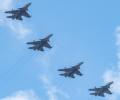
Pakistani military targets at Rafiqui, Murid, Chaklala, Rahim Yar Khan, Sukkur and Chunian were engaged using air-launched precision weapons from Indian fighter jets and the retaliation largely focused on command and control centres, radar sites and weapon storage areas, Qureshi said.

Stock market benchmark indices Sensex and Nifty tumbled over 1 per cent each on Friday as tensions soared between India and Pakistan, fuelling fears of a wider conflict.
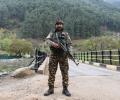
It is time we buried the mantra of 'peaceful and stable Pakistan is in our interest'. It is not, simply because Pakistan's existence -- that is synonymous with its army -- means peace has no chance, asserts Colonel Anil A Athale (Retd). It is time we buried the mantra of 'peaceful and stable Pakistan is in our interest' asserts Colonel Anil A Athale (Retd).

The attacks against the Pakistani air force have taken them at least five years back and caused great damage to them and their Chinese and Turkish inventory of weapons.
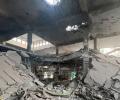
'This operation was a culmination of such long (period) of efforts, and gives us satisfaction that whatever we have been doing, we have been doing correctly'

A statement issued by State Department Spokesperson Tammy Bruce said Landau "reaffirmed the United States' strong support of India in the fight against terrorism and the strategic partnership between the two countries".

The foremost lesson for India today is to beef up its air defence to cater for multiple drone attacks. As seen in Operation Sindoor, we have come a long way, but there's room for getting better. We must develop a robust and almost impregnable air cover over ourselves, asserts IAF veteran Air Commodore Nitin Sathe (retd).
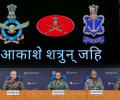
The Indian Air Force on Monday said all its military bases and systems continue to remain fully operational, and ready to undertake any further missions if the need arises.
